Table of Contents
ToggleHave you ever imagined a world where educational challenges disappear with a simple click? That’s the magic of AI in education. Today, we’re diving into how AI EdTech companies are not just changing the landscape of learning, they’re setting it ablaze. From personalizing learning experiences to automating time-consuming tasks, these companies bring fascinating innovations that also make us chuckle occasionally at their witty creations. Buckle up as we explore the ins and outs of AI in education, the benefits, challenges, and some of the pioneers in this evolving field.
Overview of AI in Education
Artificial Intelligence is the hot topic of discussion in various fields, but education? Now that’s where the real magic happens. We’re witnessing a significant transformation in how knowledge is delivered and received. Imagine a classroom brimming with personalized learning experiences tailored to each student’s needs. Sounds dreamy, right? With AI, that dream is becoming a reality. Educators are now equipped with advanced tools that analyze student data to create customized learning paths. From smart tutoring systems to interactive educational software, this technology is reshaping traditional teaching methods. In essence, AI in education isn’t just about incorporating technology: it’s about enhancing the overall learning experience and making education accessible to all.
Benefits of AI in EdTech
What’s not to love about AI in education? Let’s highlight a few benefits that could even make your smartphone green with envy. First off, efficiency reigns supreme. AI algorithms can analyze vast amounts of data in seconds, giving educators insights that help them understand student performance better than ever before. Secondly, personalized learning takes the cake. Students can learn at their own pace, receiving tailored resources and support. And let’s not forget scalability, AI tools can reach millions of learners simultaneously, bridging gaps in resources between urban and rural educational institutions. Finally, we find engagement through gamification and interactive content. Learning no longer feels tedious: instead, it transforms into a fun adventure.
Leading AI EdTech Companies
Innovative Technologies and Applications
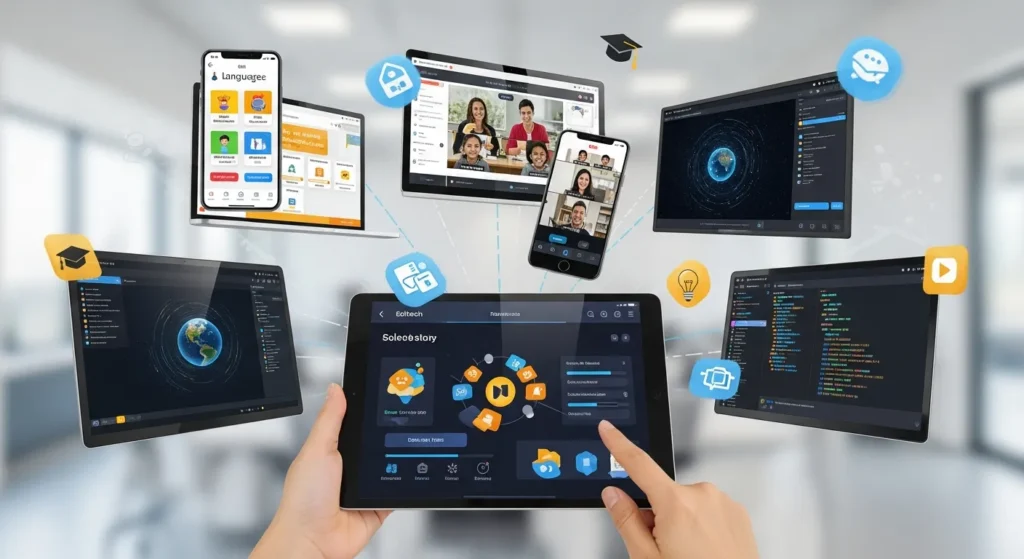
In the realm of AI EdTech, we certainly can’t overlook the frontrunners. Companies like DreamBox Learning offer adaptive math programs that adjust to individual student skills. Meanwhile, companies such as Coursera leverage AI to personalize course recommendations based on user preferences. These companies underline how innovative technology, when effectively applied, can create huge shifts in educational outcomes.
Case Studies and Success Stories
Take a moment to examine the success of companies like Duolingo. Sparks fly when AI and language learning meet. With its personalized learning paths and gamified experiences, Duolingo keeps millions engaged while learning new languages. Another fantastic case is Squirrel AI, a Chinese enterprise that uses AI-driven adaptive learning techniques to boost student learning efficiency, demonstrating a 30% increase in performance. These stories remind us that when innovation and education collide, the results often exceed expectations.
Challenges Facing AI EdTech Companies
While the future looks bright, we must also acknowledge the challenges ahead. One primary concern is ensuring data privacy and security, as students’ information is precious and should be protected diligently. Also, integrating AI into existing curriculums often proves difficult: educational institutions must adapt, train teachers, and invest in new technologies. Resistance to change is another stumbling block. Many educators feel apprehensive about adopting AI, fearing a loss of personal touch in teaching. Finally, funding and resources remain in short supply, especially for smaller startups trying to carve a niche in educational landscapes.
Future Trends and Predictions
Looking ahead, the future of AI in EdTech appears to hold exciting possibilities. We foresee advancements in natural language processing improving communication and support within learning platforms. Virtual reality may come to life, allowing students to immerse themselves in subjects like never before. Imagine exploring ancient civilizations or outer space right from your classroom. Besides, we anticipate expanded global access, as AI tools become more affordable, making high-quality education available to underserved regions. The trend towards lifelong learning might explode as AI continues to personalize experiences, catering to learners of all ages. We’re in for quite the ride.